 SnapNuvo
Your info online · November 9, 2026 · By Robert
What is a data broker? How they get your info, and how to get off
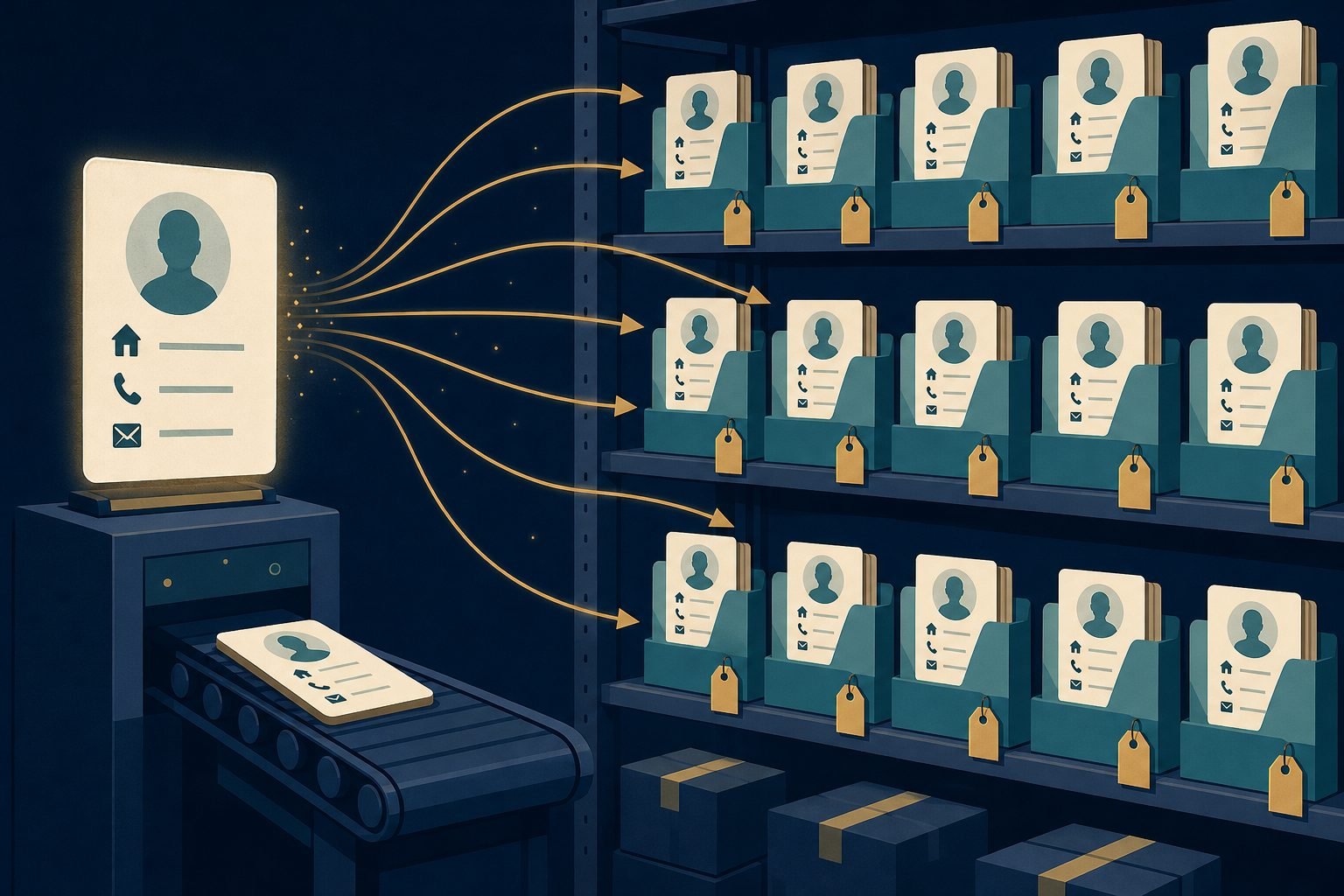
What is a data broker? It's a company that collects personal information about people and sells it, usually without ever dealing with them directly. That's how your address, phone number and relatives end up on sites you've never heard of. California alone had more than 575 brokers registered by February 2026. On our own account, Cloaked has secured 14,636 exposures across sites like these.
What is a data broker, in plain English
California's privacy agency defines a data broker as "a business that collects personal information about consumers from various sources and sells that information" (CPPA). The key part: you aren't their customer. You never signed up, but they hold a file on you anyway.
Privacy Rights Clearinghouse sorts them into three types (PRC):
- People search sites. Anyone can look you up and see your age, address, phone number and relatives. These are the ones you can see, and PRC calls them the biggest worry because they're sometimes used for stalking.
- Marketing brokers. They build lists for junk mail, telemarketing and targeted ads.
- Risk and identity brokers. They help companies confirm who you are or spot fraud.
How do data brokers get my information?
Mostly from places you'd never think to check:
- Public records: property deeds, court files, voter rolls and state records.
- Things you fill in: warranty cards, contests, surveys and loyalty programs.
- Apps, websites and social media you use every day.
- Other brokers. They buy and trade data with each other, which is why deleting one listing rarely ends it.
PRC notes that brokers "are not transparent about where their data comes from." That's the frustrating part: you can opt out of a site and still not know who sold it your address.
What data brokers look like on our own account
Here's the real list from our Cloaked app. Radaris had 13 exposures on us, VeriPages had 8 and AffordableBackgroundChecks had 12. Then comes a long run of state records and arrest-record sites, 12 exposures each, from AlabamaStateRecords on down. Addresses were the biggest slice of our 14,636 exposures, 7,203 of them, which we break down in how to remove my address from Google search.
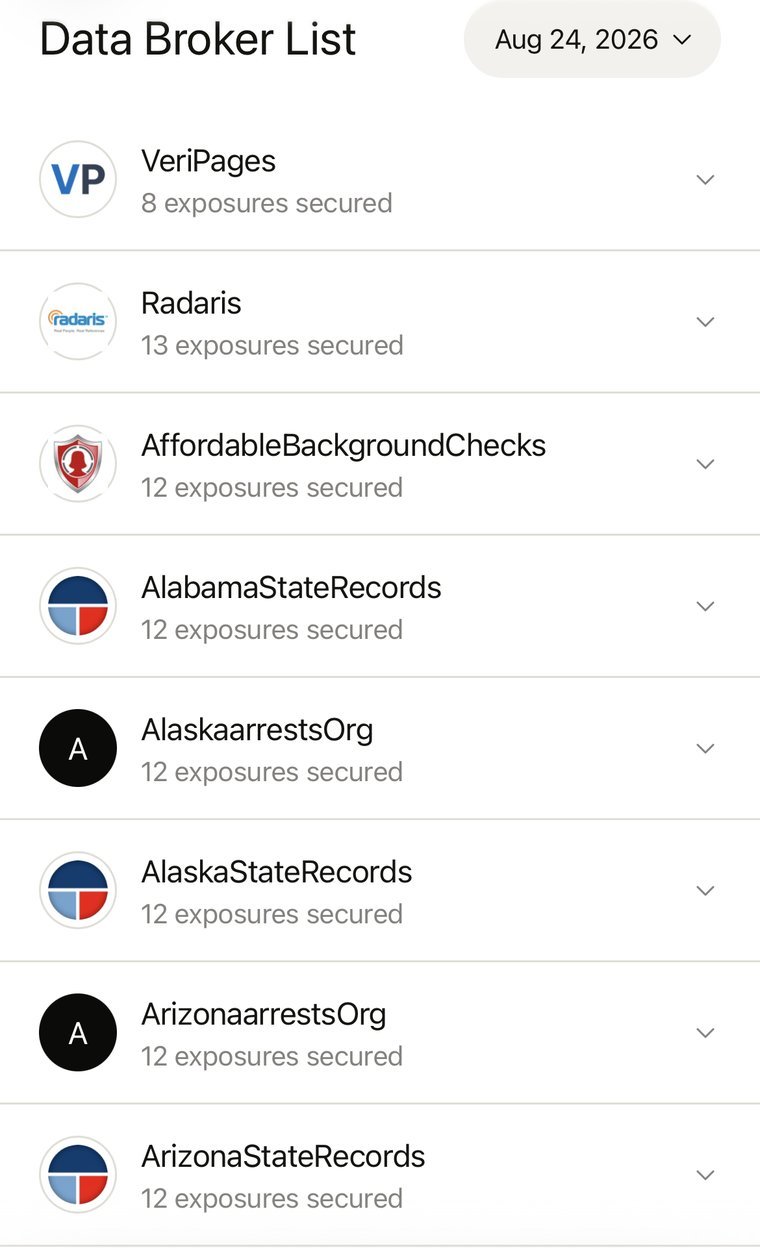
It isn't fully hands-off. One broker, PeopleConnect, needs one manual step from us, and that step clears 13 sites. Cloaked says it monitors 250 data broker sites for us.
How to get off data broker lists
- Start with the big people search sites. Most have a free opt-out form. The FTC says you may need to verify your identity and check back, because your info can reappear (FTC).
- In California, use DROP. The free DROP tool sends one deletion request to every registered broker. Since August 1, 2026, brokers must check it at least once every 45 days (CPPA).
- Hide what's left on Google. Google's free Results about you tool removes search results with your phone number, address or email. See our phone number guide.
- Or pay someone to repeat it. This is the part we pay for, because the lists refill. A service sends the requests for you and rescans.
Watch out for fake "data broker removal" texts
Scammers know people are worried about this. A text that says your info is "on 47 data broker sites" and asks you to pay right now through a link is a red flag. Real removal services don't text you out of nowhere. Go to a service's site yourself, or use the free opt-outs above.
Want to see which data brokers list you? Cloaked has a free exposure scan before you pay anything.
Run Cloaked's free scan →May earn SnapNuvo a commission
Common questions about data brokers
Are data brokers legal?
Yes, in most of the US. No federal law bans them. California makes them register and lets residents delete their data from every registered broker at once with DROP.
How do data brokers get my information?
From public records like property and court files, from apps and websites you use, from loyalty cards, warranty cards and contests, and by buying and trading data with other brokers. Most never tell you where a record came from.
Is a people search site a data broker?
Yes. People search sites like Radaris or Whitepages are the type of data broker you can see. They sell profiles with your name, address, phone number and relatives to anyone who searches.
Can I remove myself from data brokers for free?
Yes. Most brokers have a free opt-out form, though you may need to verify your identity, and the FTC says your info can come back later. Paid services do the same requests for you and repeat them.
Related: How do spammers get my phone number? · How to remove my address from Google search · Is Cloaked worth it?
Sources
- California Privacy Protection Agency, Data Broker Registry
- California Privacy Protection Agency, DROP information for data brokers
- Bloomberg Government, California privacy agency sees surge in data broker sign-ups, February 27, 2026
- Privacy Rights Clearinghouse, Data brokers and people search sites
- FTC Consumer Advice, What to know about people search sites that sell your information
- California Privacy Protection Agency, DROP
- Our own Cloaked account, data broker list and exposures by type, checked October 20, 2026