 SnapNuvo
Your info online · November 18, 2026 · By Robert
What to do after a data breach letter: 5 steps, by what leaked
Here's what to do after a data breach letter: find out exactly what leaked, then act on that. A leaked password means changing it everywhere you used it. A leaked Social Security number means freezing your credit and taking the free monitoring. A leaked card means a new card. And be careful who you call back. Cloaked found our own info in 14 data breaches, so this list is the one we follow.
Step 1: read the letter for what leaked
A real breach notice names the company and lists the kinds of data exposed: names, emails, passwords, card numbers, Social Security numbers, medical records. That list decides everything else. If the letter is vague, go to the company's own website, not a link in an email, and look for its breach notice.
Step 2: what to do after a data breach, by what leaked
These steps come from the FTC's guide to data breaches (FTC):
- Password or login: change it, and the username if you can. Then change it on every other account where you used the same password.
- Social Security number: take the free credit monitoring if the company offers it, pull your free reports at annualcreditreport.com, and freeze your credit or at least set a fraud alert. File your taxes early so a thief can't file first.
- Bank account: ask your bank to close it and open a new one.
- Credit or debit card: ask your card company to cancel it and send a new one.
- A child's info: see the FTC's separate child identity theft guide, and freeze the child's credit if they're under 16.
For your exact situation, IdentityTheft.gov/databreach walks you through it.
Step 3: freeze your credit
If your Social Security number was in the breach, a freeze is the strongest free step. It's free at Equifax, Experian and TransUnion, and it stops anyone from opening new credit in your name. We list the official links in how to freeze your credit.
Step 4: turn on two-step login
North Carolina's state IT agency recommends changing passwords right away and turning on multi-factor authentication, then watching bank statements, insurance records and credit reports for anything odd (NCDIT, June 2026). A password manager makes "a different password everywhere" realistic.
Step 5: watch for fake breach help
Breach news brings a second wave of scams. The same NCDIT guide warns about emails, texts and calls "pretending to help with the breach." A caller who says your data leaked and asks you to "verify" your Social Security number is the scam, not the fix. Hang up and use the contact details on the company's own website.
Why we keep getting these letters
On October 18, 2026, Cloaked found our info in 14 data breaches. A breach is different from a people search listing: you can opt out of a data broker, but you can't pull your details back out of a leak. That's why we do both: data removal for the broker sites, and a freeze plus unique passwords for what's already out.
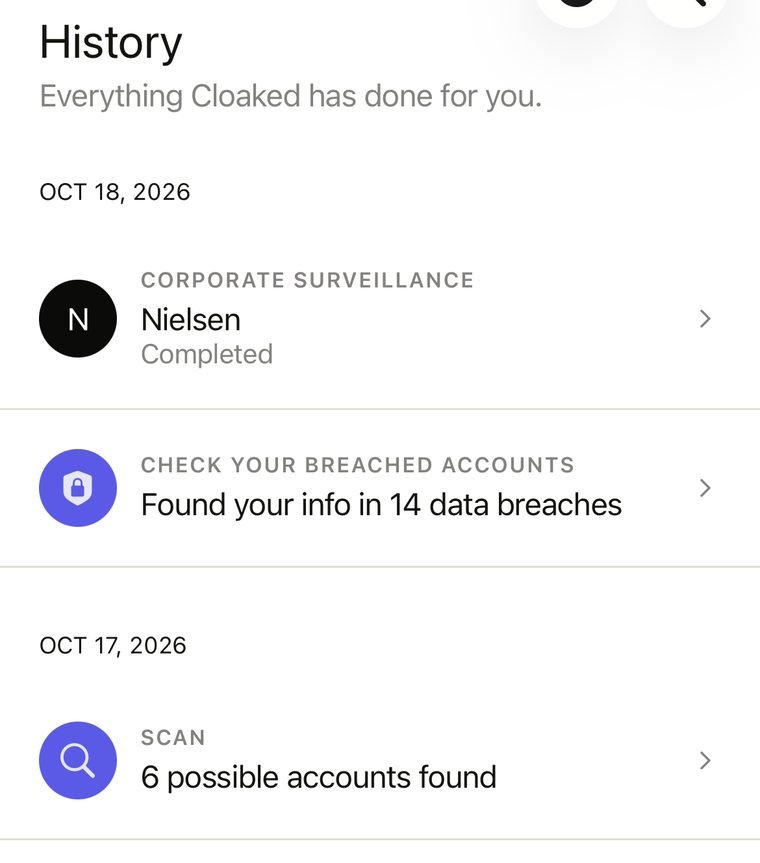
Want to see which breaches and broker sites have your info? Cloaked has a free exposure scan before you pay anything.
Run Cloaked's free scan →May earn SnapNuvo a commission
Common questions about data breach letters
Is a data breach letter real or a scam?
It can be either. A real letter names the company, says what was exposed and points you to its own website or phone number. Look that number up yourself instead of calling one in an email or text, and never give your full Social Security number to someone who calls you.
Should I take the free credit monitoring?
The FTC says yes if your Social Security number was exposed and the company offers it. Sign up through the company's official site, not a link someone sends you.
Do I need to freeze my credit after a breach?
If your Social Security number leaked, the FTC suggests a freeze, which is free at all three bureaus and blocks new accounts in your name. A fraud alert is the lighter option.
Where do I report identity theft after a breach?
Go to IdentityTheft.gov. It has a data breach page with steps for each kind of information, and it builds a recovery plan if someone has already used your details.
Related: How to check if my email was in a data breach · How to freeze your credit · AI voice clone scam calls · What is a data broker?
Sources
- FTC, Data breaches: what to know, what to do
- FTC, IdentityTheft.gov data breach steps
- North Carolina Department of Information Technology, Step by step: dealing with data breaches, June 9, 2026
- Our own Cloaked account, breach history, checked October 20, 2026